The foreign exchange (forex) market is the largest and most liquid financial market on the planet. According to the latest data from the Bank for International Settlements, average daily turnover reached $9.6 trillion in April 2025. The forex market operates 24 hours a day, five days a week, allowing traders to buy and sell currencies from every corner of the globe.
What was once the domain of banks and large institutions is now open to retail traders worldwide, thanks to online brokers, mobile apps, and low minimum deposits that make participation easier than ever. However, this accessibility comes with real risks – and the quality of your broker will play a major role in your experience and results.
In this guide, we’ll look at eight of the best forex brokers for 2026: eToro, IG, Interactive Brokers, Pepperstone, AvaTrade, OANDA, Forex.com, and Plus500. We’ll focus on vitally important factors such as regulation, pricing, platforms, features, leverage, overall trader experience, and more.
Whether you’re a complete beginner or an experienced trader, this article will help you choose the best forex brokers that match your needs.
The Best Forex Brokers in 2026: Quick Overview
Below, we’ll see what makes each of the best forex brokers truly unique, and take a closer look at some fundamental factors that traders should consider.
- eToro: Best for copy trading and social trading features.
- IG: Best for professional platforms and detailed market analysis.
- Interactive Brokers: Best for algorithmic and high-volume professional trading.
- Pepperstone: Best for low-cost forex trading and scalping.
- AvaTrade: Best for trader education and risk protection tools.
- OANDA: Best for transparent execution and strong research resources.
- Forex.com: Best for platform variety and raw spread pricing options.
- Plus500: Best for beginners and straightforward CFD trading.
| Broker | Regulation | Forex Pairs | Max Leverage | Avg EUR/USD Spread | Min Deposit | Standout Feature |
| eToro | FCA, ASIC, CySEC | 50+ | Up to 1:30 | 1 pip | $50 | CopyTrader social trading |
| IG | FCA, ASIC | 100+ | Up to 1:30 | 0.85 pips | $0 | Advanced platforms & research |
| Interactive Brokers | SEC, FCA, ASIC | 100+ | Up to 1:50 | 0.2 pips | $0 | Trader Workstation + API |
| Pepperstone | ASIC, FCA | 60+ | Up to 1:30 | 0.1 pips | $0 | Razor raw spreads |
| AvaTrade | Central Bank of Ireland, ASIC | 50+ | Up to 1:30 | 0.9 pips | $100 | Education & AvaProtect |
| OANDA | FCA, ASIC, CFTC/NFA | 68+ | Up to 1:30 | 0.9 pips | $0 | TradingView integration |
| Forex.com | CFTC/NFA, FCA, ASIC, CySEC | 80+ | Up to 1:30 | 0.8 pips | $100 | Multi-platform & raw pricing |
| Plus500 | FCA, ASIC, CySEC | 60+ | Up to 1:30 | 1.0 pips | $100 | User-friendly proprietary platform |
8 Best Forex Trading Platforms: Comprehensive Reviews
eToro – Best for Copy Trading
eToro is a multi-asset broker renowned for its innovative social trading ecosystem, which makes forex accessible through community-driven features. It offers CFD trading on over 50 currency pairs alongside stocks, ETFs, cryptocurrencies, commodities, and indices.

The platform’s CopyTrader tool lets users automatically mirror the real-time strategies of top performers, which is perfect for beginners or passive traders. eToro’s intuitive proprietary web and mobile platforms include a social feed for discussions, TradingView-powered charts, and an educational academy.
eToro is highly regulated by the FCA, ASIC, and CySEC, and also provides strong fund protection and negative balance safeguards. With no commissions on forex (although costs are incurred via spreads) and a low entry point, eToro suits social, diversified, or hands-off approaches. A free $100,000 demo account helps users practice without risk.
Pros of eToro
- CopyTrader system automatically mirrors expert forex traders’ strategies.
- Highly intuitive web and mobile app designed for beginners and social interaction.
- Broad asset range with 50+ forex CFDs, stocks, crypto, and ETFs in one account.
- Strong regulation by FCA, ASIC, and CySEC with segregated client funds.
- Low $50 minimum deposit plus unlimited free demo account for risk-free practice.
Cons of eToro
- Variable spreads (typically 1 pip on EUR/USD) are often higher than specialist ECN forex brokers.
- $5 withdrawal fee; currency conversion charges may also apply.
- Proprietary platform only – no MT4/MT5 support or algorithmic trading tools.
| Standout Feature | Average EUR/USD Spread | Leverage | Minimum Deposit |
| CopyTrader social trading | 1 pip | Up to 1:30 (retail, varies by region) | $50 |
IG – Best for Professional Platforms and Market Analysis
IG is one of the most established CFD providers, and has been operating since 1974. It provides access to over 19,000 instruments spanning forex, indices, shares, commodities, and options. Traders can choose from its proprietary web platform, dedicated mobile apps, MetaTrader 4, and additional tools such as ProRealTime and L2 Dealer for direct market access.
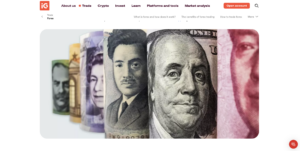
Built-in features include advanced charting, Autochartist signals, client sentiment indicators, and live news feeds. IG also offers daily market commentary, technical breakdowns, and a structured IG Academy curriculum covering beginner to advanced topics. Multiple regulators, including the FCA and ASIC, provide oversight, while its public listing supports transparency and client fund protection.
Spreads on major pairs remain competitive on IG, and execution quality is reliable. Most regions require no minimum deposit, and a full demo account supports thorough strategy testing. Therefore, IG appeals to active traders who prioritize analytical depth and platform flexibility over basic social features.
Pros of IG
- Access to more than 19,000 instruments covering multiple asset classes in one account.
- Sophisticated web platform packed with charting and direct market access options.
- Comprehensive daily research reports and full educational academy resources.
- Oversight from FCA, ASIC, and other leading regulatory bodies.
- Fast order execution supported by deep liquidity pools.
Cons of IG
- Detailed platform options can overwhelm complete beginners.
- Stock CFD commissions run higher than at some specialist competitors.
- MetaTrader 4 provides fewer symbols than the proprietary platform.
| Standout Feature | Average EUR/USD Spread | Leverage | Minimum Deposit |
| Advanced platforms and research tools | 0.85 pips | Up to 1:30 (retail) | $0 |
Interactive Brokers – Best for Professional Traders and Algorithmic Strategies
Interactive Brokers is a leading global broker and offers experienced users direct market access to stocks, options, futures, bonds, and more than 100 forex pairs across over 150 exchanges worldwide. Its Trader Workstation platform delivers highly customizable charting, specialized FXTrader workspace, sophisticated order types, and complete API support for building automated systems.

Forex execution draws on deep liquidity from 17 major interbank providers, delivering tight variable spreads and transparent, low commissions rather than markups. Interactive Brokers is regulated by the SEC, FCA, ASIC, and additional authorities, and the firm offers robust client asset segregation and a strong trust rating.
Most cash accounts open with no minimum deposit requirement, and users receive competitive interest on idle balances. Interactive Brokers prioritizes execution speed, cost efficiency, and flexibility for high-volume or systematic traders who value institutional tools over beginner-friendly simplicity.
Pros of Interactive Brokers
- Direct access to stocks, futures, and options on over 150 global exchanges.
- Trader Workstation platform with deep customization and full API capabilities.
- Tight forex spreads combined with low commissions for competitive all-in costs.
- Pays interest on uninvested cash balances to boost returns.
- Oversight by the SEC, FCA, ASIC, and other major regulators.
Cons of Interactive Brokers
- Trader Workstation can take a significant amount of time to master, especially for beginners.
- Customer support responses often take longer than at simpler brokers.
- Commission-based pricing applies to most trades and instruments.
| Standout Feature | Average EUR/USD Spread | Leverage | Minimum Deposit |
| Trader Workstation with API tools | 0.2 pips | Up to 1:50 (varies by region) | $0 |
Pepperstone – Best for Low-Cost Forex Trading and Scalping
Pepperstone is an Australian CFD and forex broker launched in 2010 that focuses on direct market access and competitive pricing for active traders. The firm supplies more than 1,200 instruments covering 60-plus currency pairs, plus indices, commodities, and share CFDs. Clients can trade through MetaTrader 4, MetaTrader 5, cTrader, or TradingView, each offering advanced charting and automation support.
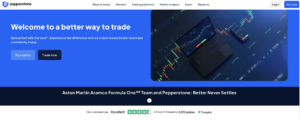
Pepperstone’s Razor account supplies raw spreads starting at 0.0 pips drawn from multiple tier-1 liquidity providers, with a modest commission applied separately. ASIC, FCA, and other regulators supervise operations and enforce client fund segregation, including negative balance protection. No minimum deposit is needed to open most accounts, and demo environments remain available for practice.
The platform’s low-latency infrastructure and high fill rates work especially well for scalpers and day traders who require minimal slippage and transparent all-in costs rather than bundled social tools or extensive beginner guidance.
Pros of Pepperstone
- Razor account supplies raw spreads from 0.0 pips with low per-lot commissions.
- Four professional platforms available: MT4, MT5, cTrader, and TradingView.
- No minimum deposit required across standard and Razor accounts.
- Rapid execution backed by deep liquidity from tier-1 banks.
- Regulated by ASIC, FCA, and several other leading authorities.
Cons of Pepperstone
- Commission charges apply to Razor account forex trades.
- Educational content remains limited compared with that of full-service brokers.
- CFD-only model restricts direct ownership of shares or bonds.
| Standout Feature | Average EUR/USD Spread | Leverage | Minimum Deposit |
| Razor account raw spreads | 0.1 pips | Up to 1:30 (retail) | $0 |
AvaTrade – Best for Trader Education and Risk Protection Tools
AvaTrade, launched in 2006, delivers a CFD-focused environment with over 50 forex pairs plus stocks, indices, commodities, cryptocurrencies, and options. The broker stands out for its detailed learning academy, packed with structured courses, video tutorials, and progress quizzes that build skills from the ground up. A unique AvaProtect option lets users pay a modest fee to safeguard chosen positions against losses for a specific timeframe.

Standard accounts operate without commissions, relying instead on predictable spreads via MT4, MT5, WebTrader, or the AvaTradeGO mobile forex trading app. Oversight is provided by the Central Bank of Ireland, ASIC, and several other bodies, with segregated client funds and negative balance protection in place.
While AvaTrade’s pricing sits at industry-average levels rather than the sharpest available, it’s still an attractive option for newer traders and those seeking structured guidance and built-in safeguards rather than raw execution speed or social features. A $100 minimum deposit opens live trading, backed by an extended demo environment.
Pros of AvaTrade
- Full education academy with videos, courses, and skill-testing quizzes.
- AvaProtect lets users insure specific trades against losses for a fee.
- Multiple platforms, including MT4, MT5, WebTrader, and mobile app.
- Commission-free standard accounts with no added markups.
- Strong oversight from the Central Bank of Ireland, ASIC, and peers.
Cons of AvaTrade
- Average EUR/USD spreads near 0.9 pips lag behind ECN leaders.
- Inactivity fees apply after three months of inactivity.
- CFD model only, with no direct share or crypto ownership.
| Standout Feature | Average EUR/USD Spread | Leverage | Minimum Deposit |
| Education academy & AvaProtect | 0.9 pips | Up to 1:30 (retail) | $100 |
OANDA – Best for Transparent Execution and In-Depth Market Research
OANDA has operated as an online broker since 1996, providing more than 68 forex pairs plus CFDs across indices, commodities, and metals. The OANDA Trade platform incorporates TradingView charting directly for analysis and order placement, supplemented by MetaTrader 4 and dedicated mobile options. Clients receive ongoing market insights via MarketPulse reports, sentiment data, and economic calendars.

Orders on OANDA are processed through a transparent, straight-through model backed by multiple liquidity providers. Regulatory oversight from authorities such as the FCA, ASIC, and CFTC/NFA ensures client funds are segregated and protected against negative balances. No minimum deposit is required to open an account, and a full-featured demo account is provided so users can test their ideas.
While spreads sit at competitive but not always market-leading levels, OANDA works well for traders seeking clear pricing, solid research support, and reliable fills, rather than ultra-low costs or copy-trading features.
Pros of OANDA
- Zero minimum deposit requirement for live trading accounts.
- TradingView charts are fully integrated with direct order placement.
- High-quality research via MarketPulse and economic analysis tools.
- Multiple top regulators, including FCA, ASIC, and CFTC/NFA.
- Transparent execution and published trade performance data.
Cons of OANDA
- Standard account spreads average higher than those of leading ECN brokers.
- Inactivity fees may apply after extended periods of inactivity.
- Smaller selection of non-forex CFDs compared to multi-asset brokers.
| Standout Feature | Average EUR/USD Spread | Leverage | Minimum Deposit |
| TradingView integration & research | 0.9 pips | Up to 1:30 (retail) | $0 |
Forex.com – Best for Platform Variety and Raw Spread Pricing
Forex.com offers more than 80 forex pairs, as well as CFDs on indices, commodities, metals, and select shares. The broker’s custom web, desktop, and mobile applications integrate TradingView charts for technical analysis, while full MT4 and MT5 access supports automated strategies and custom indicators.
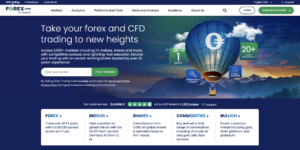
Account options include spread-only structures or raw interbank spreads from 0.0 pips plus a fixed commission, giving volume-based traders clearer cost control. Execution draws from multiple liquidity pools, with public statistics confirming reliable fills. Tier-1 regulators, including the CFTC/NFA, FCA, ASIC, and CySEC, supervise the platform and enforce segregation of funds and capital requirements.
A $100 minimum deposit is required for most live accounts, and Forex.com provides an unlimited demo environment for testing. The offering targets active traders who demand platform flexibility and transparent pricing models, rather than social networks or simplified beginner setups.
Pros of Forex.com
- Full choice of proprietary apps, MT4, MT5, and TradingView integration.
- Raw spreads from 0.0 pips are available on commission accounts.
- Published execution data confirms consistent order fills.
- Oversight from CFTC/NFA, FCA, ASIC, and other Tier-1 bodies.
- $100 minimum deposit paired with unlimited demo access.
Cons of Forex.com
- Standard spread-only accounts tend to be wider than pure ECN options.
- Commission fees apply to raw-spread account trades.
- $100 minimum deposit exceeds zero-deposit competitors.
| Standout Feature | Average EUR/USD Spread | Leverage | Minimum Deposit |
| Multi-platform choice & raw pricing | 0.8 pips | Up to 1:30 (retail) | $100 |
Plus500 – Best for Beginners and Straightforward CFD Trading
Plus500 offers CFD trading on a wide selection of assets, including forex, indices, commodities, shares, ETFs, and cryptocurrencies, through its own streamlined, proprietary platforms. Designed with simplicity in mind, its web and mobile apps offer a clean interface that lets new traders quickly find their way around without steep learning curves.
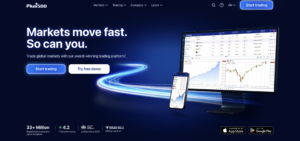
All costs are covered by variable spreads on a commission-free basis, while multiple top regulators, such as the FCA, ASIC, and CySEC, provide oversight through segregated client accounts and negative balance protection.
Plus500 maintains a low entry barrier with a $100 minimum deposit and also supplies a fully functional demo account. This model should suit individuals who prefer an uncomplicated trading experience over complex tools or the tightest possible pricing.
Pros of Plus500
- Straightforward proprietary web and mobile apps are ideal for new users.
- Broad CFD selection spanning multiple asset classes.
- Commission-free trading with costs included in spreads.
- Oversight from FCA, ASIC, CySEC, and other major regulators.
- Low $100 minimum deposit and an accessible demo account.
Cons of Plus500
- No access to MT4, MT5, or any other external forex trading platform.
- Spreads tend to run wider than those at ECN-style brokers.
- $10 monthly inactivity fee kicks in after three months.
| Standout Feature | Average EUR/USD Spread | Leverage | Minimum Deposit |
| User-friendly proprietary platform | 1.0 pips | Up to 1:30 (retail) | $100 |
What Should You Look for When Choosing a Forex Broker?
Choosing the best forex broker requires traders to evaluate several key factors and make sure they align with their trading style, risk tolerance, and goals.
Regulation
Regulation serves as the foundation of broker trustworthiness. Reputable forex trading brokers hold licenses from strict authorities such as the FCA (UK), ASIC (Australia), CFTC/NFA (USA), or the Central Bank of Ireland. These bodies enforce rules on client fund segregation, capital requirements, and transparent reporting.
Look for brokers that clearly display their regulatory licenses and offer additional protections, such as negative balance protection or participation in compensation schemes. Strong regulation significantly reduces the risk of fund mismanagement or unfair practices.
Pricing
Pricing directly affects your profitability, especially with frequent trading. Compare both spreads and commissions – some brokers offer raw spreads from 0.0 pips with a small commission, while others use wider spreads with no commission. You should also examine swap rates for overnight positions and any hidden fees for deposits or withdrawals.
The most competitive brokers provide transparent all-in costs and allow you to choose between different pricing models based on your trading style.
Broker / Account Types
Brokers typically operate under different execution models, including ECN, STP, or Market Maker. Each model has its own advantages regarding spreads, execution speed, and potential conflicts of interest.
Most brokers also offer several account types, from beginner-friendly standard accounts to professional raw-spread or ECN accounts aimed at experienced traders. Understanding these differences will help you match the broker structure to your specific needs.

Leverage
Leverage allows you to control larger positions with smaller capital, but it also magnifies both profits and losses. Maximum leverage varies significantly by regulator – for example, 1:30 applies to retail clients in the UK, EU, and Australia, while some offshore regulators permit much higher ratios. Consider your experience level and risk tolerance carefully before using high leverage, and remember that effective risk management becomes even more critical when trading with leverage.
Range of Trading Pairs
The number and variety of currency pairs available can impact your trading opportunities. While all major brokers offer the majors and minors, the selection of exotic pairs varies widely across platforms. Serious traders should check liquidity on their preferred pairs, especially during different trading sessions. A wider selection is particularly valuable if you prefer trading cross-pairs or exotic currencies rather than sticking to EUR/USD and GBP/USD.
Features and Tools
Quality platforms and supporting tools can make a major difference to your trading efficiency. Look beyond basic order placement to evaluate charting capabilities, technical indicators, economic calendars, news feeds, and automated trading support. Some brokers stand out with strong research content, sentiment tools, or educational academies.
Advanced traders should also verify API access and compatibility with third-party tools such as TradingView.
Minimum Deposit & Payment Methods
The minimum deposit requirement determines how easily you can get started. While some brokers have no minimum, others require a minimum of $100. Equally important are the available funding methods (bank transfers, credit cards, e-wallets such as PayPal, Skrill, or Neteller) and the associated fees. Check processing times for both deposits and withdrawals, as fast and low-cost funding options improve your overall trading experience.

User Experience
A clean, intuitive platform design helps you focus on trading rather than fighting the software. User experience covers everything from account opening speed to how easily you can navigate charts, place orders, and access account information. Beginners usually benefit from simpler interfaces, while experienced traders may prefer highly customizable platforms with advanced order types and one-click trading functionality.
Mobile Trading
Mobile trading capability has become essential for most traders today. Evaluate whether the broker’s mobile app offers full functionality or just basic features. The best apps provide reliable charting, fast order execution, push notifications for price alerts, and secure account management. Test how well the app performs on both Android and iOS devices, especially during high-volatility periods.
Customer Support
Reliable customer support becomes crucial when you encounter technical issues or have urgent questions. Look for brokers offering 24/5 or 24/7 support through multiple channels, including live chat, telephone, and email. Consider the quality of responses and whether the support staff demonstrates proper product knowledge. Some brokers also provide support in multiple languages, which can be valuable for international clients.
What Are Forex Trading Fees, and How Do They Work?
Forex trading comes with several layers of costs that can quickly eat into your profits if you don’t understand them. The most universal fee is the spread – the small difference between the price at which you can buy a currency pair (the ask) and the price at which you can sell it (the bid). Brokers quote prices in pips, and the spread is how they earn money on every trade.
For example, if EUR/USD shows a bid of 1.0850 and an ask of 1.0852, the spread is 2 pips. On a $10,000 position, that 2-pip spread costs you roughly $2 every time you open and close the trade. Tighter spreads (0.1–0.5 pips) are common on major pairs during busy trading hours, while exotic pairs usually carry wider spreads.

Many brokers also charge commissions, especially on raw-spread or ECN accounts. These are typically $3 to $7 per standard lot ($100,000) each way. So opening and closing one lot might cost $6–$14 in total commissions. This model often gives you the tightest possible spreads but adds a predictable fixed cost.
Don’t overlook other account fees either. Overnight swap (rollover) charges may apply if you hold positions past 5pm New York time. Some brokers also add withdrawal fees, currency conversion charges, or inactivity fees of $10–$15 per month if you stop trading for three months. Always read the full fee schedule before funding an account.
How to Start Forex Trading With eToro
Getting started with forex trading on eToro is straightforward and beginner-friendly. Follow these simple steps to open your account and place your first trade.
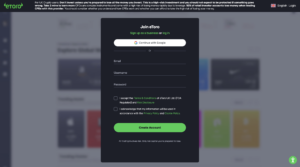
Step 1. Sign Up for an Account
Visit the eToro website or app and click “Join Now”. Enter your email, create a username, and choose a strong password (or sign up with Google).
Step 2. Complete Your Profile and Verify Identity
Fill in your personal details and answer a few questions about your trading experience. Upload a photo ID (passport or driver’s license) and proof of address. Verification usually takes 1–2 business days.
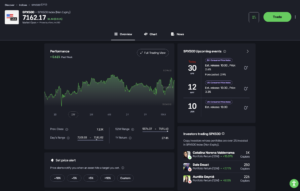
Step 3. Practice With the Demo Account
eToro automatically provides a free $100,000 virtual portfolio, which you can use to explore the platform and test forex trades with no real money at risk.
Step 4. Deposit Funds
Once verified, click “Deposit Funds” in the menu. The minimum deposit is typically $50 (and may vary slightly by country). Choose from bank transfer, card, PayPal, or other local options.
Step 5. Find a Currency Pair
In the search bar or under “Markets” > “Forex”, look up popular pairs like EUR/USD, GBP/USD, or AUD/JPY.
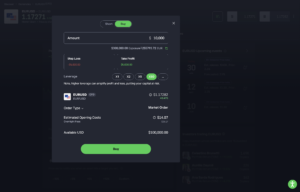
Step 6. Place Your First Trade
Click the pair, choose the “Buy” or “Short” option, enter your stake amount, select leverage, add optional stop-loss or take-profit levels, then click the “Buy” or “Short” button.
Step 7. Monitor and Manage Positions
Go to your “Portfolio” tab to track open trades, adjust them, or close positions at any time.
That’s it – you’re now trading forex on eToro! Always start small and use the demo account until you feel confident.
Things to Consider Before Trading Forex
Before you place your first real-money forex trade, take the time to weigh several critical factors. Understand that forex is high-risk, and statistics show that most retail traders lose money. Only use capital you can afford to lose completely – never borrow money or dip into essential savings.
Leverage is one of the biggest traps for new traders. While it lets you control large positions with little money, it also multiplies losses. A 1:30 leverage ratio means a 3% move against you can wipe out your entire margin. Always calculate your risk per trade (most professionals risk no more than 1–2% of their account on any single position) and use stop-loss orders.
Understanding the total cost of trading is equally important. Compare not just spreads but commissions, swap rates, and any hidden charges. Small differences become expensive when you trade forex frequently. Choosing a properly regulated broker is equally vital – look for licenses from the FCA, ASIC, or CFTC/NFA to protect your funds.
Finally, treat trading like a skill that needs practice. Spend weeks or months on a demo account building and testing a clear trading plan. Keep a trading journal, control your emotions, and be ready for the reality that consistent profitability takes time, discipline, and ongoing learning.
Conclusion and Final Verdict
The forex market offers countless opportunities for savvy traders, but success starts with selecting the right broker. In this guide, we reviewed eight of the best forex brokers for 2026 (eToro, IG, Interactive Brokers, Pepperstone, AvaTrade, OANDA, Forex.com, and Plus500), and found that each one excels in specific areas – from copy trading to professional-grade tools, ultra-low costs, simple beginner interfaces, and more.
After examining every option, we found that eToro is the best overall forex broker for most traders in 2026. Its CopyTrader system makes professional strategies accessible – even to complete beginners – while its intuitive platform, strong regulation (FCA, ASIC, CySEC), low $50 minimum deposit, and broad asset selection are suited to both new and experienced users. Professional traders can also benefit from eToro’s social trading features and multi-asset range, and rest assured that trade execution will be consistently solid and reliable.
Our Methodology
For this article, we ranked the eight top forex brokers by examining their platforms in depth and considering key factors such as available trading pairs, pricing, maximum leverage, core features, execution quality, minimum deposit requirements, and educational resources. We also considered each platform’s regulatory requirements under leading authorities (FCA, ASIC, CFTC/NFA, and others), cross-checked data from each broker’s official site and regulatory disclosures, and tested interfaces directly through demo and live accounts.
FAQ
What is forex trading?
Forex trading is the buying and selling of currencies on the global foreign exchange market. It is the world’s largest financial market, operating 24 hours a day, five days a week. Traders aim to profit from fluctuations in exchange rates between currency pairs.
Is eToro a safe and regulated broker?
Yes. eToro is authorized and regulated by the FCA, ASIC, and CySEC. Client funds are held in segregated accounts, and negative balance protection ensures you cannot lose more than you deposit.
What are the best forex brokers in the USA?
US residents have access to several well-regulated brokers featured in this guide. Interactive Brokers, OANDA, and Forex.com consistently rank among the best forex brokers USA, thanks to their CFTC/NFA regulation, competitive pricing, fast execution, and professional-grade tools designed for American traders.
What is the minimum deposit on eToro?
eToro’s minimum deposit is $50 for most users. The exact amount can vary slightly depending on your country of residence and chosen payment method.
How does eToro’s CopyTrader feature work?
CopyTrader lets you automatically mirror the real-time trades of experienced forex traders. You select who to copy, choose how much to invest, and their positions are replicated in your account without any extra fees.
Does eToro charge commissions on forex trades?
No, eToro does not charge commissions on standard forex trades. All costs are included in the spread. A $5 withdrawal fee applies when you cash out funds.
What is the best forex trading app or platform in the USA?
For traders in the United States looking for the best forex trading app USA or forex trading platform USA, Interactive Brokers and Forex.com are excellent choices. Both deliver sophisticated mobile apps and powerful desktop platforms with tight spreads, advanced charting tools, and full CFTC/NFA regulatory compliance.
Is forex trading suitable for beginners?
Yes, especially with eToro. Beginners can practice risk-free on a $100,000 demo account, use CopyTrader to follow successful traders, and access educational resources before trading with real money.
Can I lose more money than I deposit when trading forex on eToro?
No. eToro’s negative balance protection ensures you cannot lose more than the funds in your account, even during extreme market movements.
References
- Forex Market Explained: History, Mechanics, Pros & Cons (Investopedia)
- What Is a Spread in Forex Trading? (BabyPips)
- Forex Regulations (Forex.com)